Lloyd D’Souza

I run the operational systems behind global creative at scale — and I’m building the next generation of them with AI.

Board Seat Soho Rep Theater Company NYC A nonprofit 501(c)(3) arts organization. Its mission is to be a “civic theater” that produces ambitious, innovative new works by radical theatermakers and provides them with high-caliber productions and tailored development at key points in their artistic careers.
Board Advisory Stealth AI Product AI Content Development Platform built for 360 development and execution. Currently being tested by filmmakers, writers, designers and copywriters.

Career Timeline

Mid 2000sLos Angeles

Development / Production.

My early years in my creative journey had me exploring my ideas in different ways. I worked in development at Warner Brothers and independent companies — reading screenplays, giving notes, meeting writers and directors, and shaping stories for the screen.

I directed music videos and short films, experimenting with different camera systems and lighting techniques, and working with diverse crews who shaped how I thought about a scene or a story.

I led a visual effects and post-production company that tackled massive jobs for major campaigns and smaller artistic explorations with some of the world's best designers and animators.

And I wrote my own screenplays — tapped by Oscar-winning producer Mark Johnson (Rain Man, The Narnia Franchise, Breaking Bad) to adapt a Sci-Fi novel he had acquired and subsequently sold.

01 Short Film
Last DanceVimeo
Last Dance
4 International Film Festival Screenings
02 Reel
Director reelVimeo
2011 Reel
Video
03 Music Video
Sabrosa PurrVimeo
Sabrosa Purr — Fashion Kills
Music Video

Los Angeles2012 → 2016

StarBeast Digital  |  Traction Avenue Films.

Co-Founded a multi-disciplinary production company at the intersection of narrative, experiential, and interactive.

With Traction Avenue Films I managed a roster of 10 directors — helping them shape opportunities, respond to briefs, and supporting production and delivery through StarBeast Digital.

StarBeast Digital was a VFX/Animation house that delivered memorable visuals for a John Mayer Tour, a Brand Jordan NBA All Star Weekend Interactive Activation, a Pilot for a Disney Animated series, and numerous other technically challenging but highly-rewarding projects.

As a small team, as much as I helped lead from an executive level, success required me to get my hands dirty on set, in post, and in pitches — invaluable to my growth as the industry shifted.

01 Spot
Nike · JordanVimeo
Nike Jordan — The Last Shot
Cannes Lions Winner
02 Reel
Company reelVimeo
StarBeast Digital — Company Reel
Video
03 Campaign
Conrad × TribecaVimeo
Conrad Hotels × Tribeca Film Festival
Video

Vox Creative2016 → 2018

Vox Creative  |  The Explainer Studio.

Executive Producer & Creative Director at Vox Creative — I helped lead the organization, pitch process development, and creative executions as Vox Media grew into a formidable and influential digital publisher.

Developed the visual language and creative directed the output of a brand identity that translated into photo, print, audio podcast segments, a brand video anthem, and OOH Times Square assets for the Vox Media: Go Deeper brand campaign that launched during AdWeek.

Partnered with Editorial to launch The Explainer Studio — a forward-thinking branded studio that capitalized on the incredible journalistic processes of the Vox editorial team and brought this thinking, diligence, and creativity to brand partners.

01 Studio
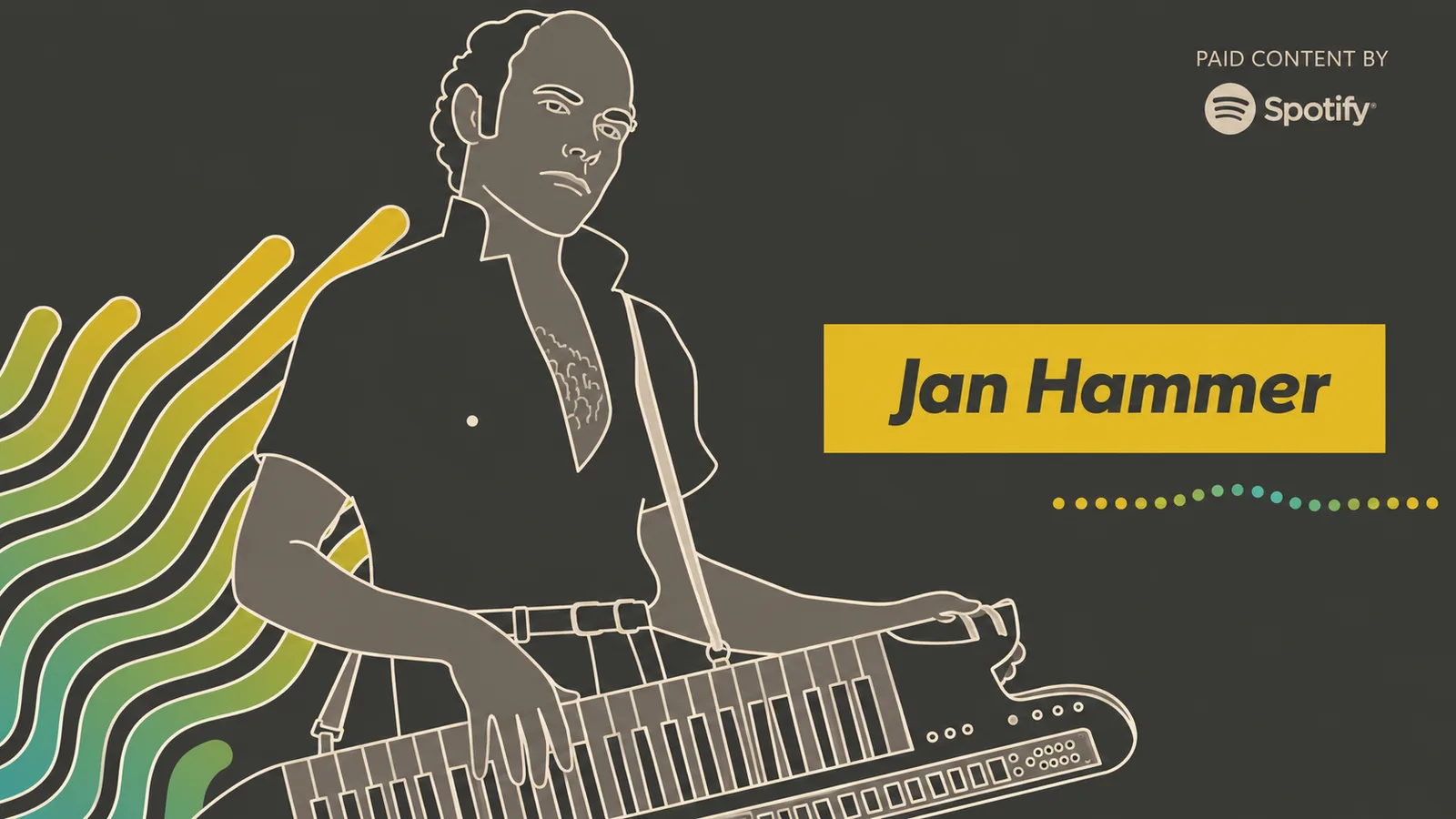
Vox × SpotifyYouTube
Explainer Studio × Spotify
Video
02 Trailer
Marriott × VoxVimeo
Marriott × Vox Media
Video
03 Anthem
Vox MediaVimeo
Vox Media Brand Anthem
Video

Condé Nast2018 → present12 markets

Global Video & Audio and the business underneath.

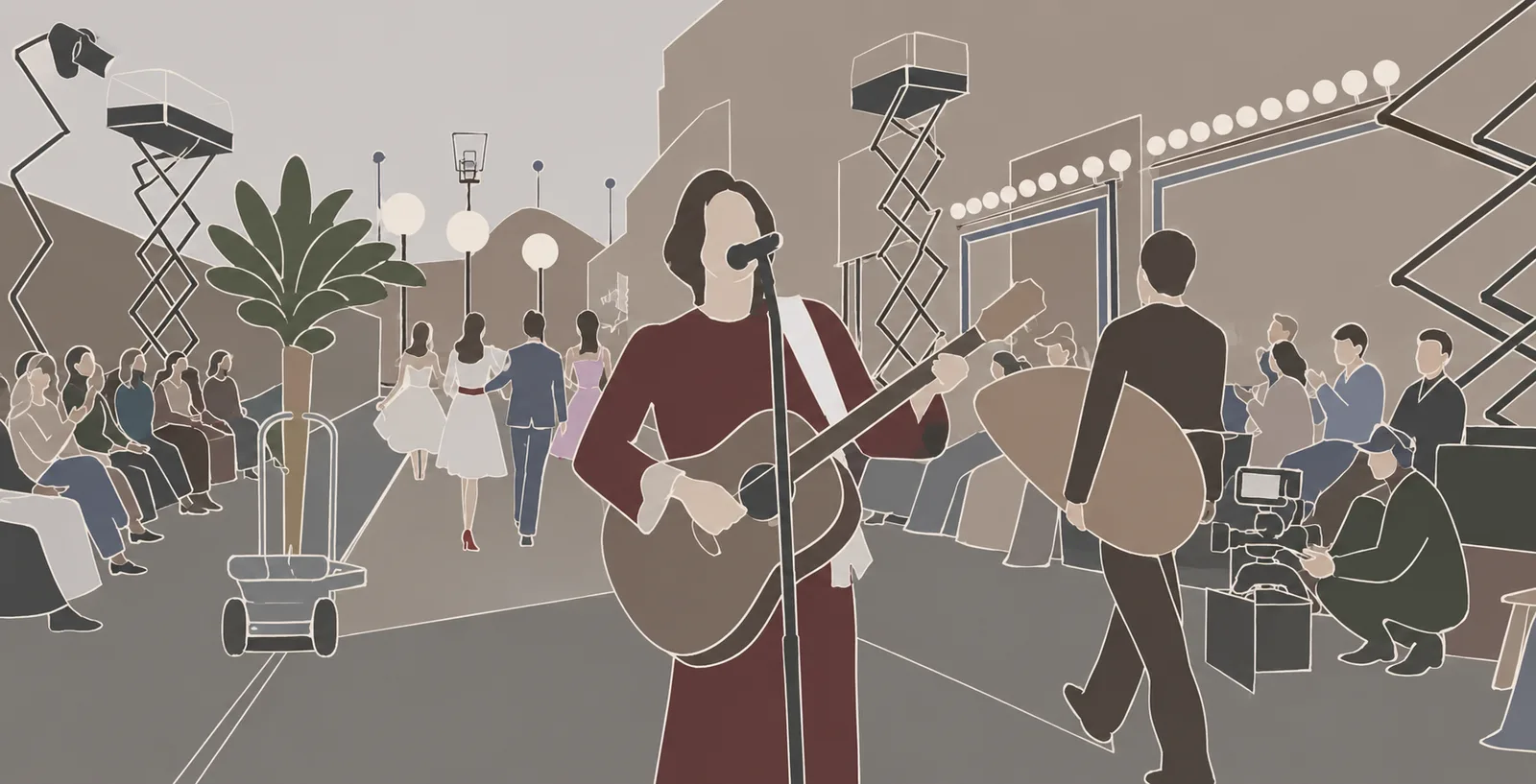
At Condé Nast, I lead global video and audio content development and operations — overseeing strategy, live production, franchise development, and podcasts across 12 markets for an iconic portfolio including Vogue, GQ, WIRED, and Vanity Fair. My teams deliver the industry's most significant cultural tentpoles, from the Met Gala and Vogue World to the Vanity Fair Oscar Party and GQ Men of the Year. During my tenure leading commercial video, branded revenue saw a 400% increase, and I transitioned GQ Sports from a nascent concept into a flagship franchise. Most recently, I took over the podcast division, launching new series across five brands. Partnering with Business Development, I am expanding the reach of our content, including securing a major licensing partnership with Netflix.

Beyond executive oversight, I focus on the complex systems that allow creativity to thrive at a global scale. My role involves identifying high-impact formats, establishing unified workflows for international teams, and eliminating the operational friction that hinders innovation. To support this, I have moved toward building proprietary technical solutions; I led the ideation and implementation of an AI-driven visual learning and optimization platform, developed in partnership with AWS and Twelve Labs, which is currently reactivating our extensive content archive across all digital formats.

Los Angeles New York Mexico City Paris London Munich Milan Madrid Dubai Mumbai Shanghai Taipei Tokyo

Markets · positions stylized

Global Brands: Vogue · GQ · AD · CNT · WIRED

01 Brand Reel
Condé NastVimeo
Condé Nast Brand Reel
Video
02 Tentpole
Vogue World 2025YouTube
Vogue World 2025
Video · YouTube live

2025 → presentLive wire

Building / AI Architecture.

Three things in motion right now.

01

Built
Inside Condé Nast

Creative Dashboard

AI dashboard editorial leadership uses to run the business at Condé Nast. Built on Claude Design over Databricks.

02

In Use
Personal Build

The Campus

Multi-agent storytelling workspace built on OpenClaw and Claude.

03

Development
Personal Build

The Orb

3D Daily Workspace

Spatial productivity environment built in TouchDesigner with Claude Code; integrates Superhuman, Wispr Flow, and Granola MCPs.

My early years in my creative journey had me exploring my ideas in different ways. I worked in development at Warner Brothers and independent companies — reading screenplays, giving notes, meeting writers and directors, and shaping stories for the screen.

I directed music videos and short films, experimenting with different camera systems and lighting techniques, and working with diverse crews who shaped how I thought about a scene or a story.

I led a visual effects and post-production company that tackled massive jobs for major campaigns and smaller artistic explorations with some of the world's best designers and animators.

And I wrote my own screenplays — tapped by Oscar-winning producer Mark Johnson (Rain Man, The Narnia Franchise, Breaking Bad) to adapt a Sci-Fi novel he had acquired and subsequently sold.

01Short Film
Last Dance
4 International Film Festival Screenings
02Reel
2011 Reel
Video
03Music Video
Sabrosa Purr — Fashion Kills
Music Video

Co-Founded a multi-disciplinary production company at the intersection of narrative, experiential, and interactive.

With Traction Avenue Films I managed a roster of 10 directors — helping them shape opportunities, respond to briefs, and supporting production and delivery through StarBeast Digital.

StarBeast Digital was a VFX/Animation house that delivered memorable visuals for a John Mayer Tour, a Brand Jordan NBA All Star Weekend Interactive Activation, a Pilot for a Disney Animated series, and numerous other technically challenging but highly-rewarding projects.

As a small team, as much as I helped lead from an executive level, success required me to get my hands dirty on set, in post, and in pitches — invaluable to my growth as the industry shifted.

01Spot
Nike Jordan — The Last Shot
Cannes Lions Winner
02Reel
StarBeast Digital — Company Reel
Video
03Campaign
Conrad Hotels × Tribeca Film Festival
Video

Executive Producer & Creative Director at Vox Creative — I helped lead the organization, pitch process development, and creative executions as Vox Media grew into a formidable and influential digital publisher.

Developed the visual language and creative directed the output of a brand identity that translated into photo, print, audio podcast segments, a brand video anthem, and OOH Times Square assets for the Vox Media: Go Deeper brand campaign that launched during AdWeek.

Partnered with Editorial to launch The Explainer Studio — a forward-thinking branded studio that capitalized on the incredible journalistic processes of the Vox editorial team and brought this thinking, diligence, and creativity to brand partners.

01Studio
Explainer Studio × Spotify
Video
02Trailer
Marriott × Vox Media
Video
03Anthem
Vox Media Brand Anthem
Video

At Condé Nast, I lead global video and audio content development and operations — overseeing strategy, live production, franchise development, and podcasts across 12 markets for an iconic portfolio including Vogue, GQ, WIRED, and Vanity Fair. My teams deliver the industry's most significant cultural tentpoles, from the Met Gala and Vogue World to the Vanity Fair Oscar Party and GQ Men of the Year. During my tenure leading commercial video, branded revenue saw a 400% increase, and I transitioned GQ Sports from a nascent concept into a flagship franchise. Most recently, I took over the podcast division, launching new series across five brands. Partnering with Business Development, I am expanding the reach of our content, including securing a major licensing partnership with Netflix.

Beyond executive oversight, I focus on the complex systems that allow creativity to thrive at a global scale. My role involves identifying high-impact formats, establishing unified workflows for international teams, and eliminating the operational friction that hinders innovation. To support this, I have moved toward building proprietary technical solutions; I led the ideation and implementation of an AI-driven visual learning and optimization platform, developed in partnership with AWS and Twelve Labs, which is currently reactivating our extensive content archive across all digital formats.

01Brand Reel
Condé Nast Brand Reel
Video
02Tentpole
Vogue World 2025
Video · YouTube live
Built · inside Condé Nast

Creative Dashboard

AI dashboard editorial leadership uses to run the business at Condé Nast. Built on Claude Design over Databricks.

Personal build

The Campus

Multi-agent storytelling workspace built on OpenClaw and Claude.

Personal build

The Orb

3D Daily Workspace

Spatial productivity environment built in TouchDesigner with Claude Code; integrates Superhuman, Wispr Flow, and Granola MCPs.

01

Built
Inside Condé Nast

Creative Dashboard

AI dashboard editorial leadership uses to run the business at Condé Nast. Built on Claude Design over Databricks.

The Problem

Our data lives across disparate systems — a Databricks lake, spreadsheets, social platforms, site analytics tools. Getting at any of it means going to a team for a pull, delivered as a spreadsheet or dashboard that wasn’t built for top-line insight or for deeper exploration without a second query.

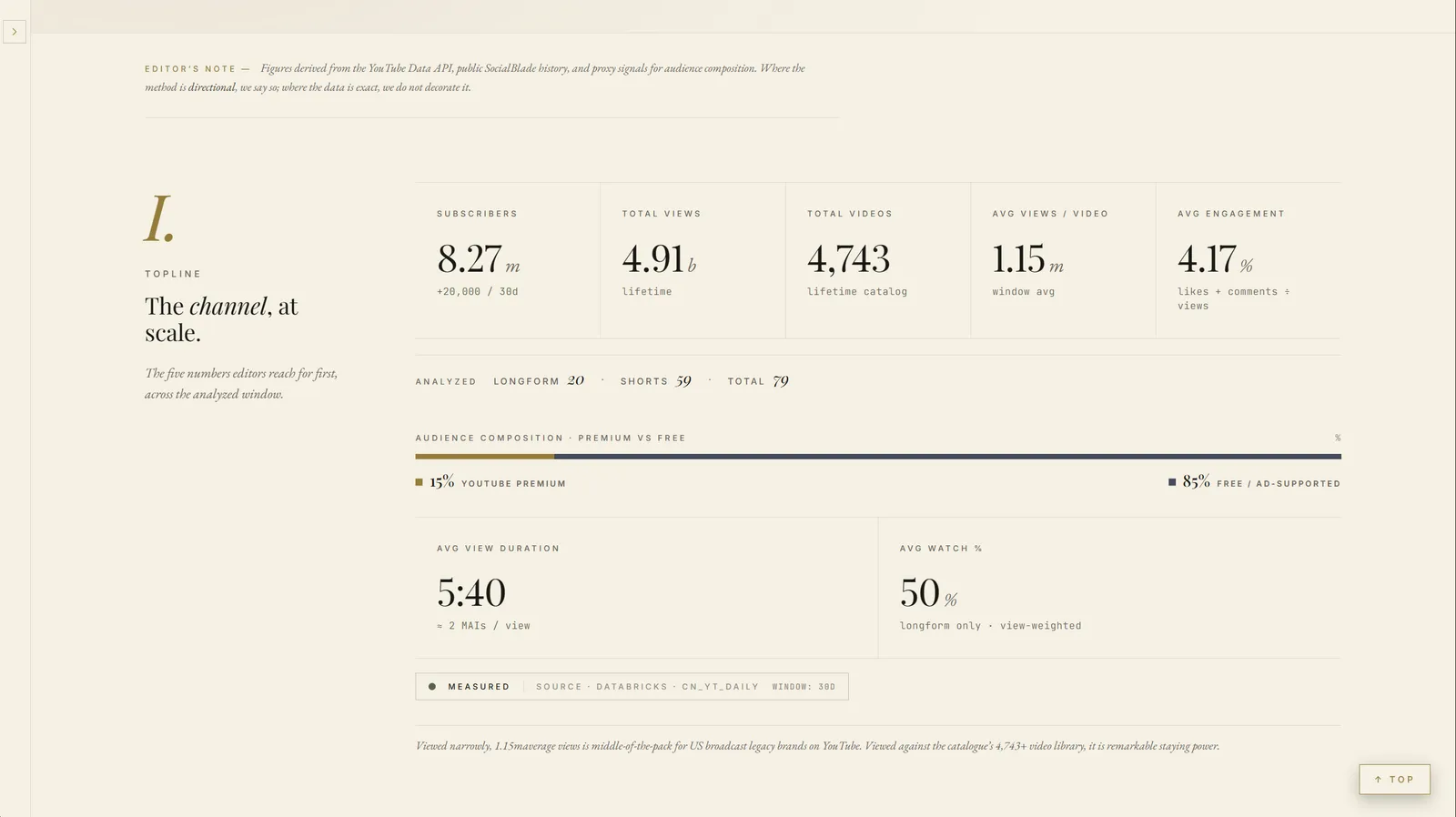
I wanted an interface visually attractive enough to live alongside our brands, delivering video performance data in a way that let users skip the back-and-forth and ask the more critical business questions directly. I also wanted insights to surface alongside the data — measured against parameters I set for performance, competitive set, growth targets, and brand value. Those parameters live in markdown files at each point of analysis, keeping the insights directionally correct and giving editorial teams something they can test, iterate, and ideate around.

In Development

A Topline
GQ · YouTubeScreen
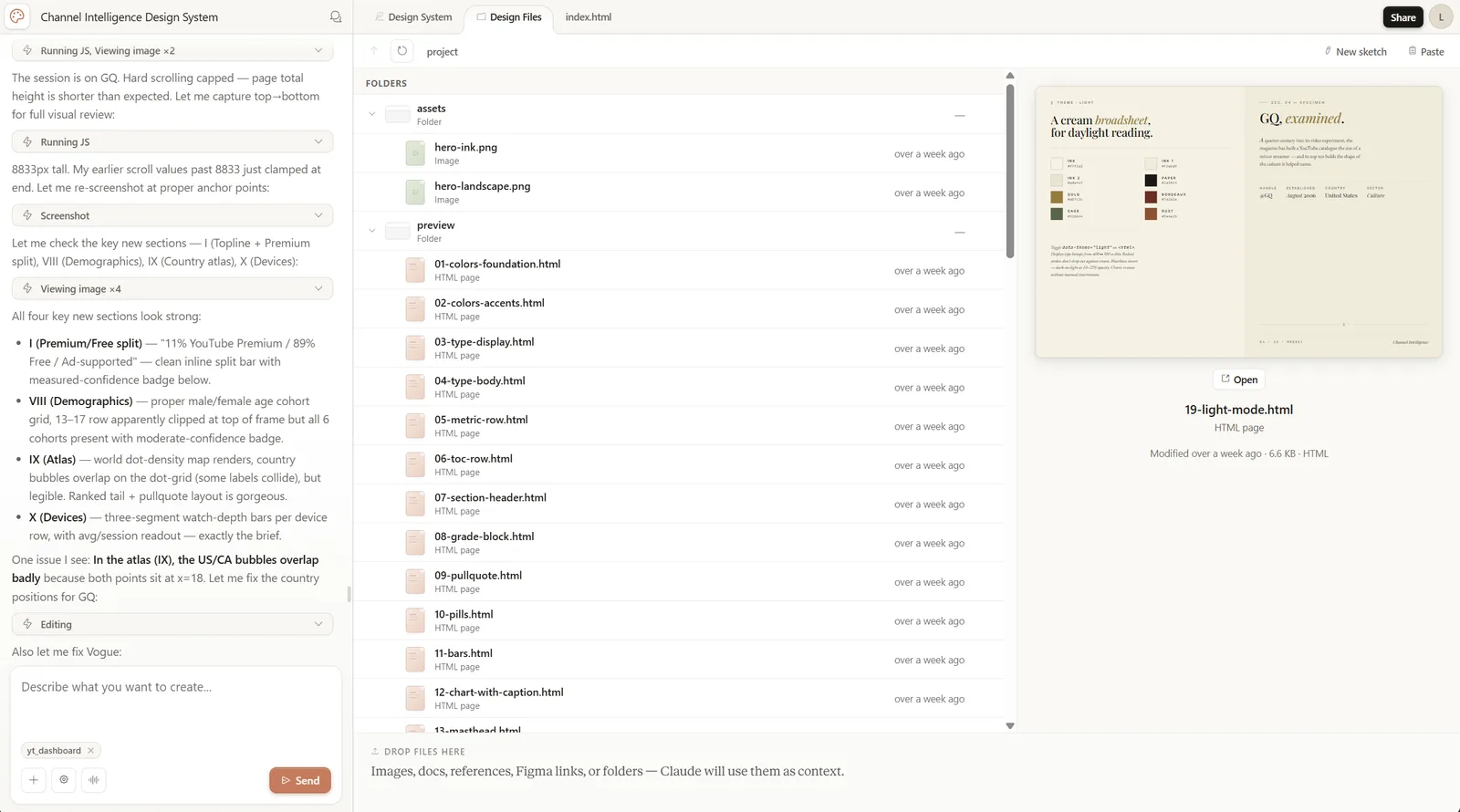
Claude Design Build
Screen
B Audience
GQ · GeographyScreen
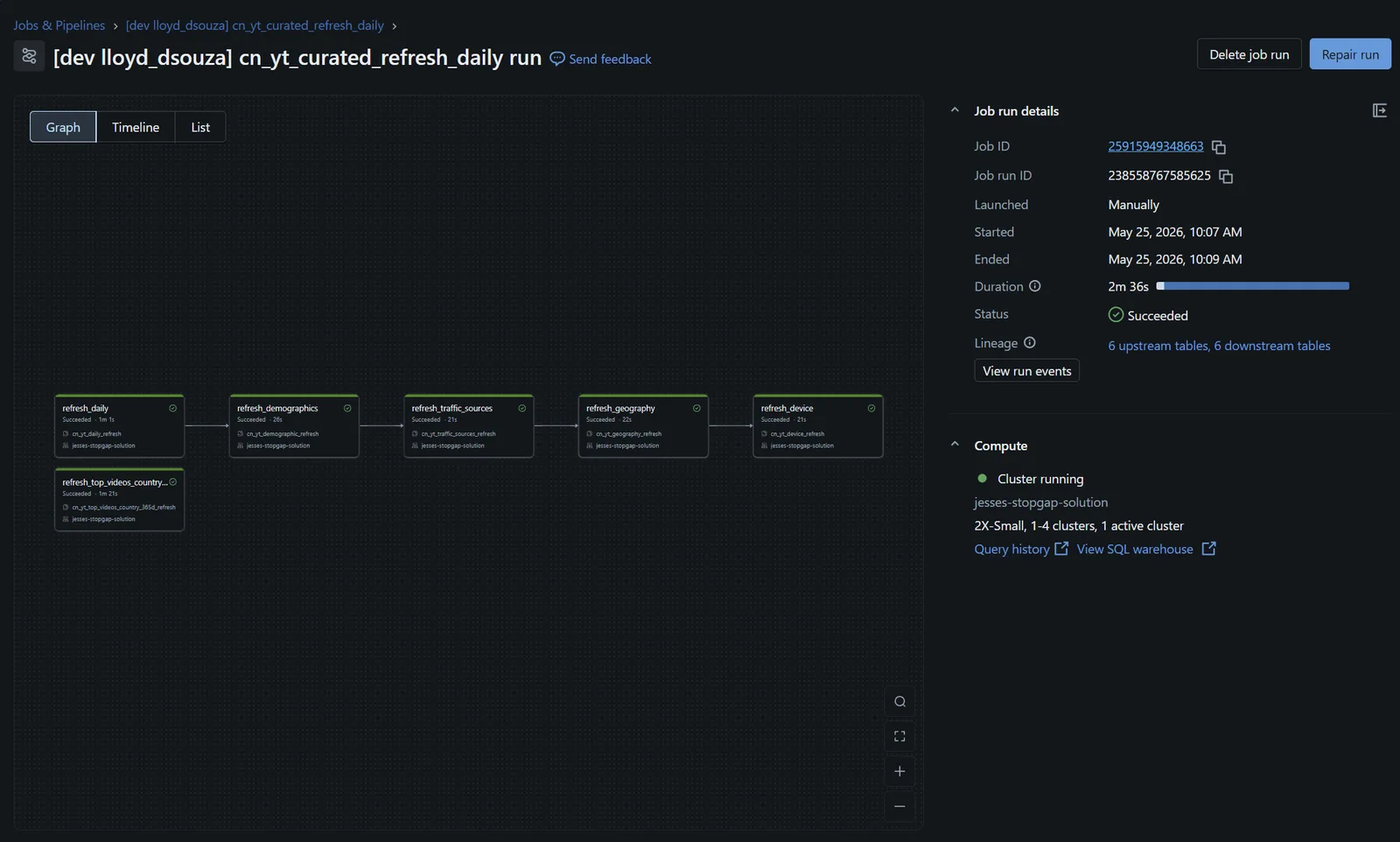
Databricks Job Incremental Flow
Screen

Approach & Deployment

I used Claude Code to scaffold the data model and the APIs feeding it. The first layer was public: YouTube via Google Cloud; Instagram and TikTok through RapidAPI; SuperData and Social Blade for industry context; Google SERP for news; a public Reddit API for mentions; and the Anthropic API for the intelligence layer — Haiku for summarization, Sonnet for quick categorical analysis on transcripts, Opus for deeper strategic synthesis.

With the structure built, I moved into Claude Design — pulling templates from each of our brands and our corporate identity, working toward a delivery aesthetically adjacent to the portfolio but reading as editorial in its categorization and pacing. Once I had a template editorial would respond to, I brought it back into Claude Code and rebuilt the site against the new visual system.

Then I partnered with our Databricks and engineering teams for warehouse access, writing SQL queries against the silver tables to bring in proprietary data for cross-brand search. A user can now tap the warehouse for deep insights across YouTube and social, or supply any public YouTube channel and its socials to pull competitive analysis on similar channels.

It’s in the hands of a working group right now — editorial, engineering, and content operations leaders, using it with intent. The next step is iterating toward a broader rollout via protected Okta workday login to editorial teams and commercial leaders — shortening the distance between question and decision on content and the business underneath it.

In Action

Walkthrough
Creative Dashboard · liveVimeo
Creative Dashboard — product walkthrough
Video
02

In Use
Personal Build

The Campus

Multi-agent storytelling workspace built on OpenClaw and Claude.

The Problem

Time. Storytelling takes time — research the subject, build tone and genre, develop world and character, work through themes, run multiple iterations, share with other storytellers and artists willing to give an honest opinion. And when you collaborate, there’s the constant question of shared credit.

With a full-time job in a creative field, I’ve drifted further from original work. I wanted to build the equivalent of a research room, a library, and a writer’s room — with the tools to ship a finished draft.

In Development

A Overview
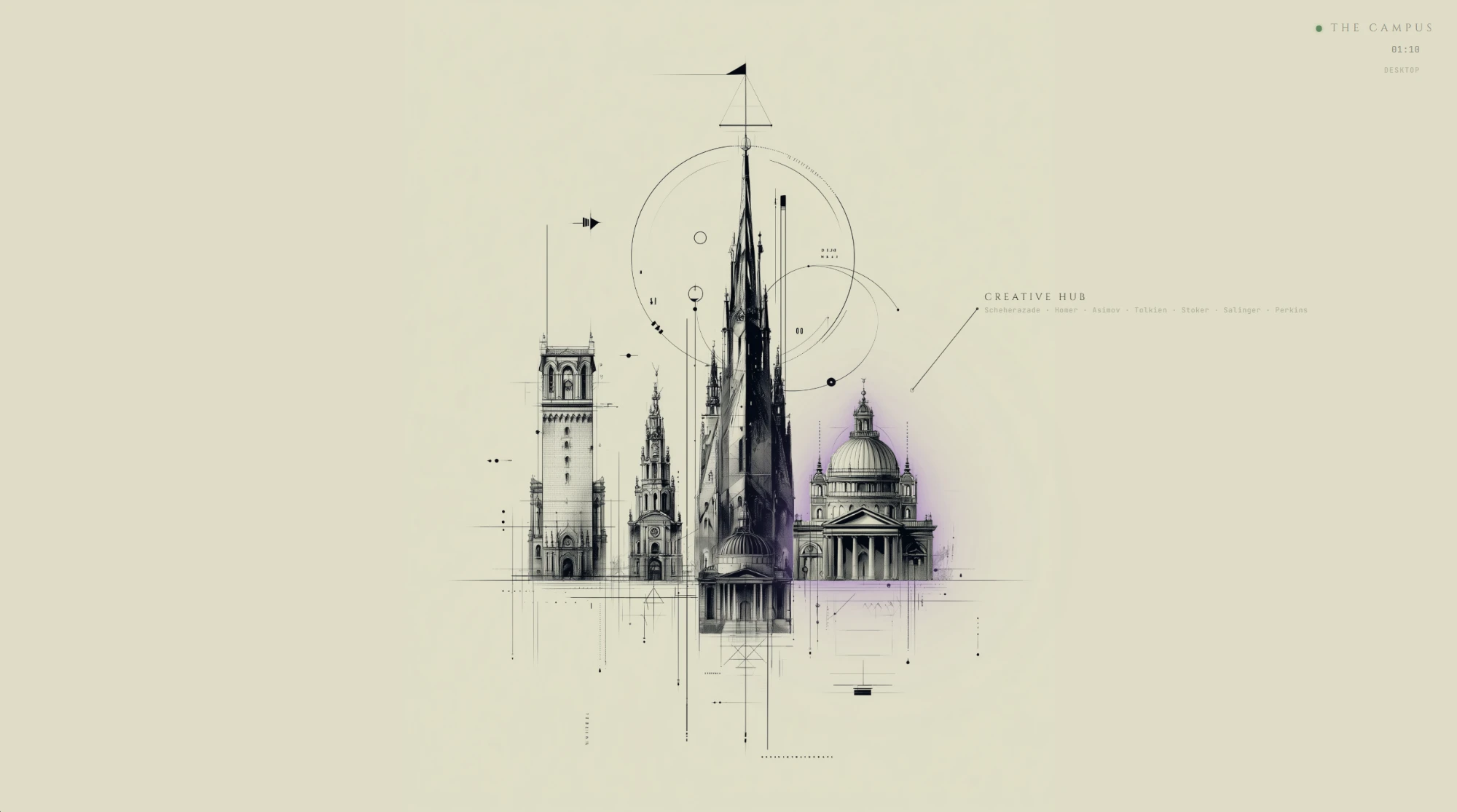
The CampusConcept
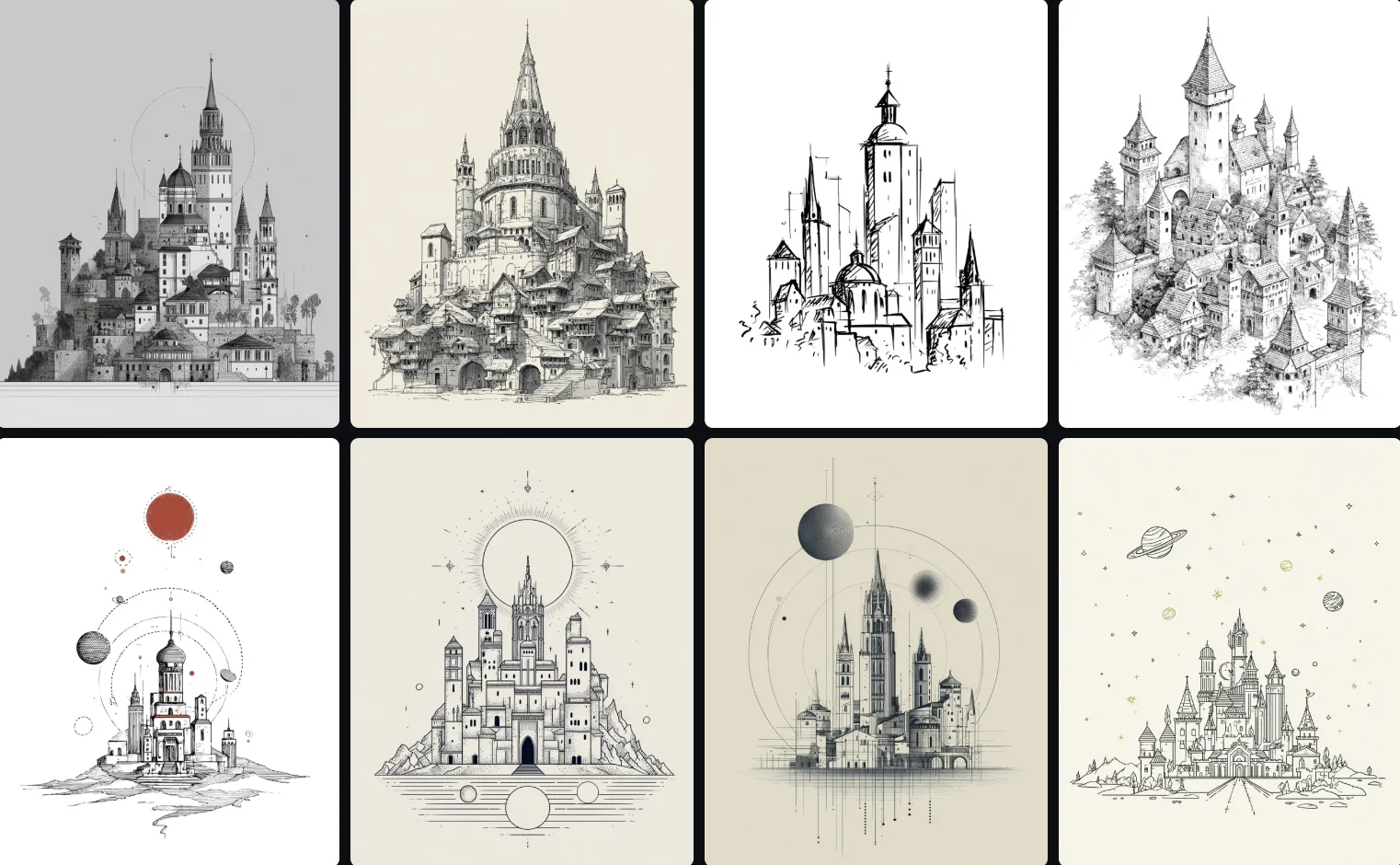
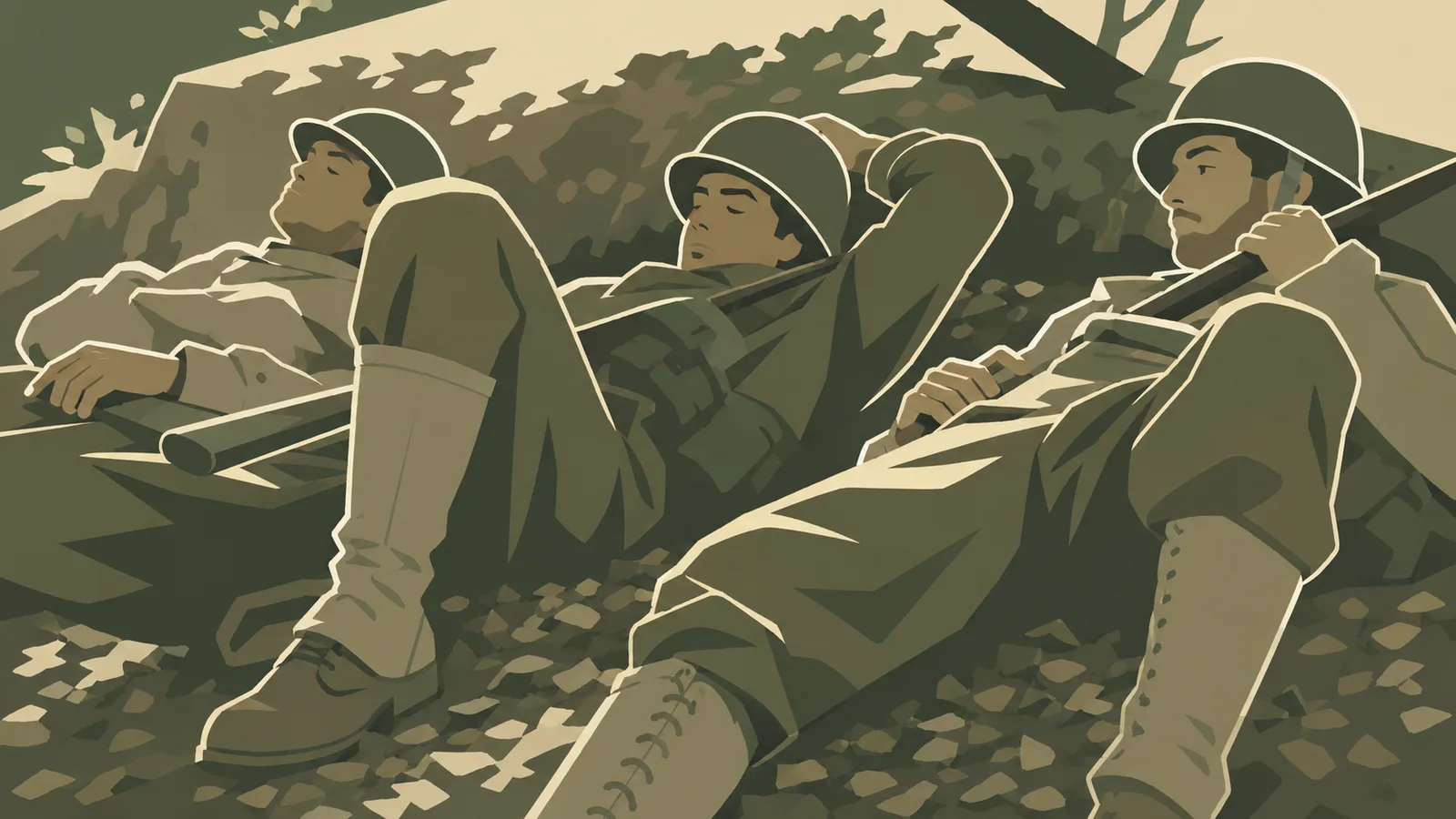
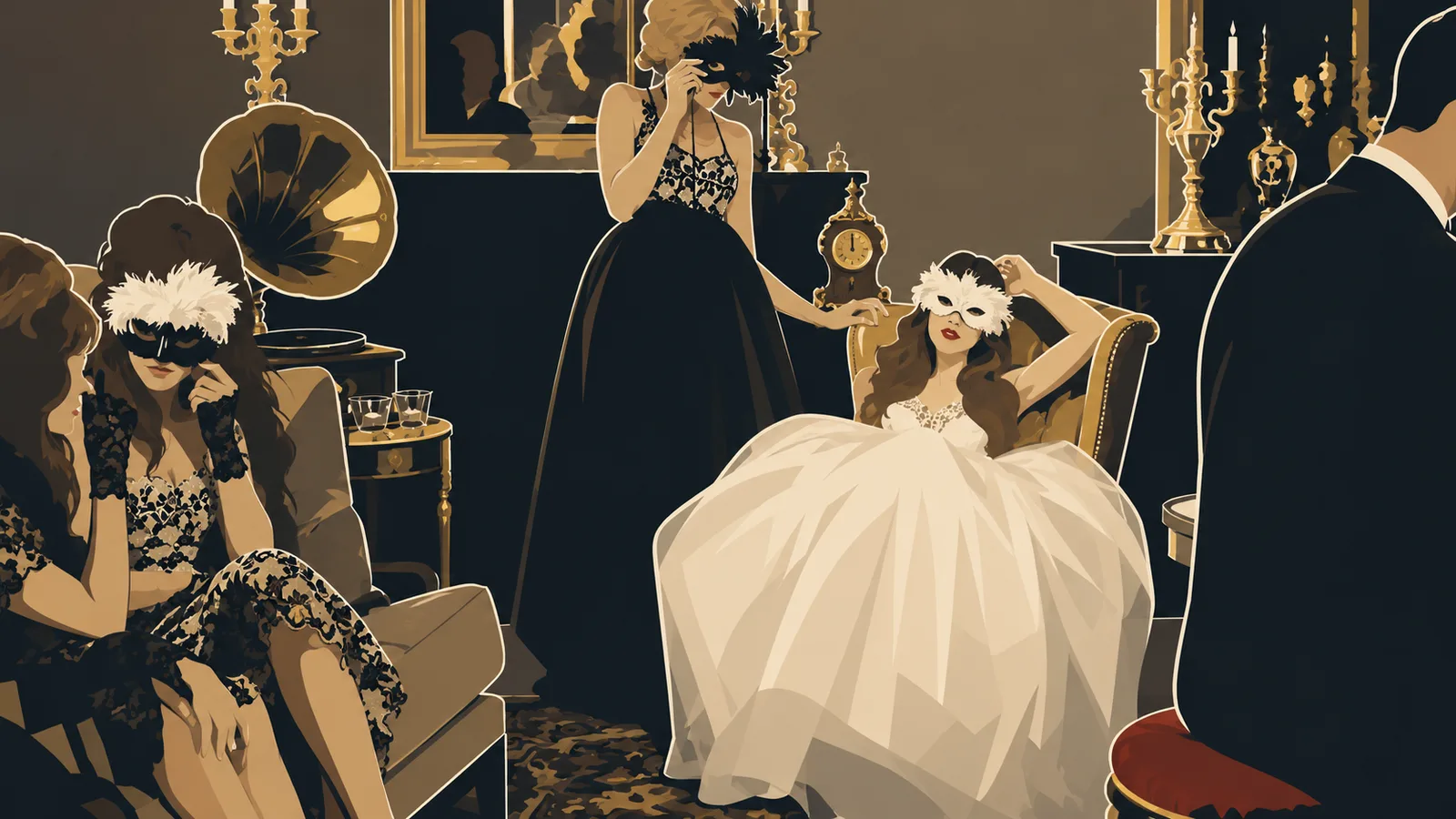
Midjourney Design Exploration
Concept
B Workshop
The CampusConcept
Architecture
Concept

Approach & Use

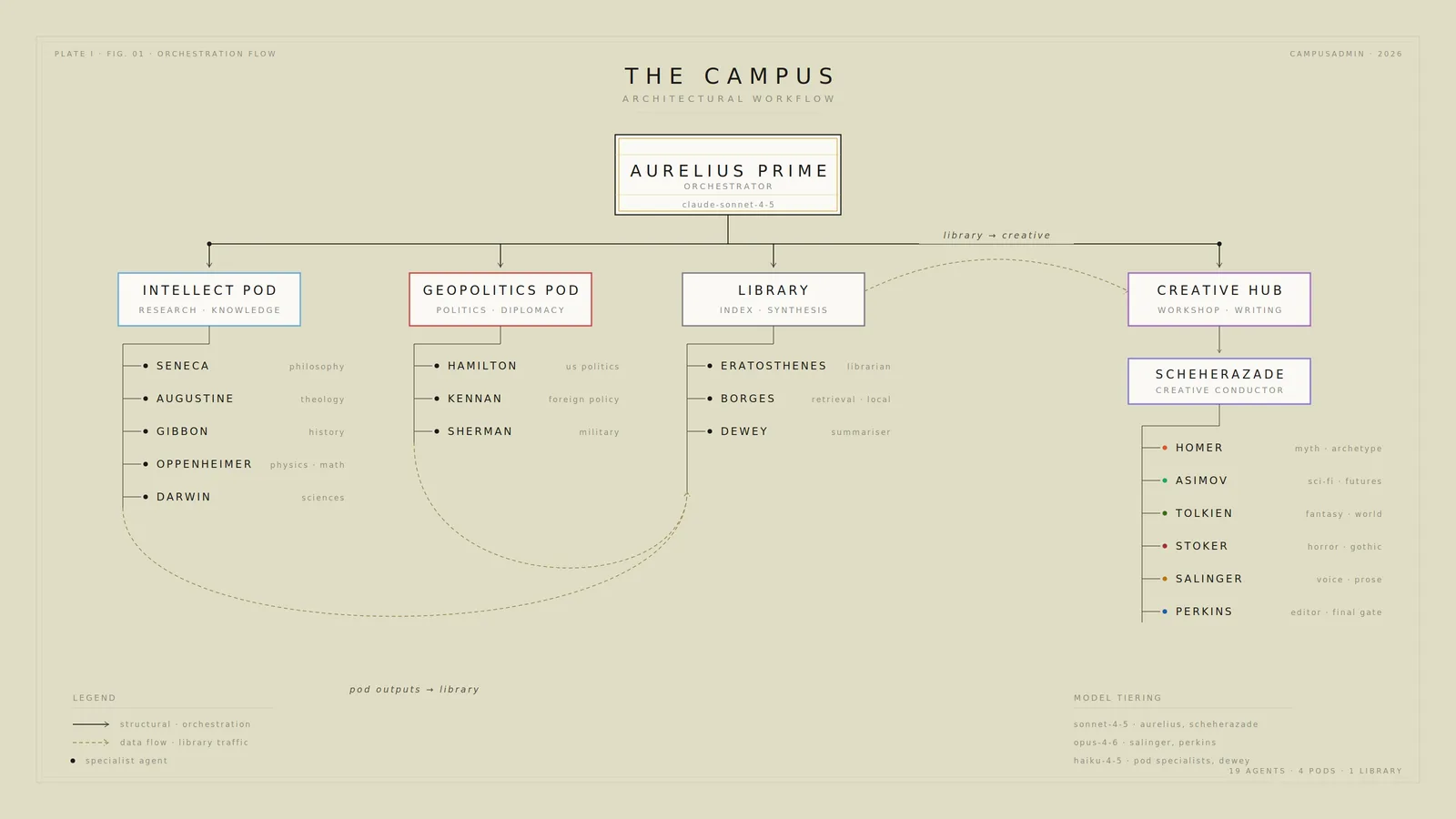
I knew I’d need multiple personalities — researchers, writers, writing assistants, and a main operator orchestrating them. I built the system on OpenClaw and Claude Code. I call it The Campus.

A single architect runs it — Aurelius, the main operator — tagging in purpose-built agents for research, development, and creative work. Each agent has its own temperament, talents, interests, and biases, built deliberately to handle specific tasks.

The intellect pod: Seneca for philosophy, Gibbon for history, Augustine for theology, Oppenheimer for physics and theoretical science, Darwin for biology. The geopolitics pod: Hamilton for American history, Kennan for geopolitical history, Sherman for military history. Everything they produce lands in a library — cataloged by Borges, condensed for top-level search by Dewey, synthesized by Eratosthenes.

The creative shop runs under Scheherazade with Homer for mythology, Asimov for science fiction, Tolkien for fantasy, and Stoker for horror. All of it funnels into the writing room — Salinger as the writer, Max Perkins as the editor — delivering drafts formatted for novel, screenplay, short story, treatment, or poem.

I move fluidly between workspaces, take ideas on the fly, and stay in contact with Aurelius over Telegram. Finished work goes into a panel review run by a separate Opus agent — built-in understanding of screenplay and novel coverage that delivers feedback on prose quality, format, story tempo, characters, continuity, and market value.

I can also import files and generate a writer profile by uploading five pieces of my own work — a dossier Salinger picks up and references for anything we write together. What once took me six months to a year for a full first draft now takes a few spare hours spread across a couple of weeks. About a month or two for something strong enough to share.
In Action

Walkthrough
The Campus · alphaVimeo
The Campus — agents collaborating on a scene
Video
03

Development
Personal Build

The Orb

3D Daily Workspace

Spatial productivity environment built in TouchDesigner with Claude Code; integrates Superhuman, Wispr Flow, and Granola MCPs.

The Problem

Daily inputs are chaotic. Emails, calendar invites, tasks, Slacks, thoughts, journal entries, appointments, dreams — they get lost across folders, notepads, email addresses, programs. When they come in all at once you can lose your way, and worse, lose sight of the things deeper.

I wanted to build a program that brought everything into one place — a serene, controllable environment that gathered the scattered parts of your life, let you organize them, gave you a sense of accomplishment as you completed them, and made room for the deeper things you sometimes forget.

In Development

A Spatial
TouchDesignerConcept
TouchDesigner reference export
Concept
B Build
The Orb · in spaceScreen
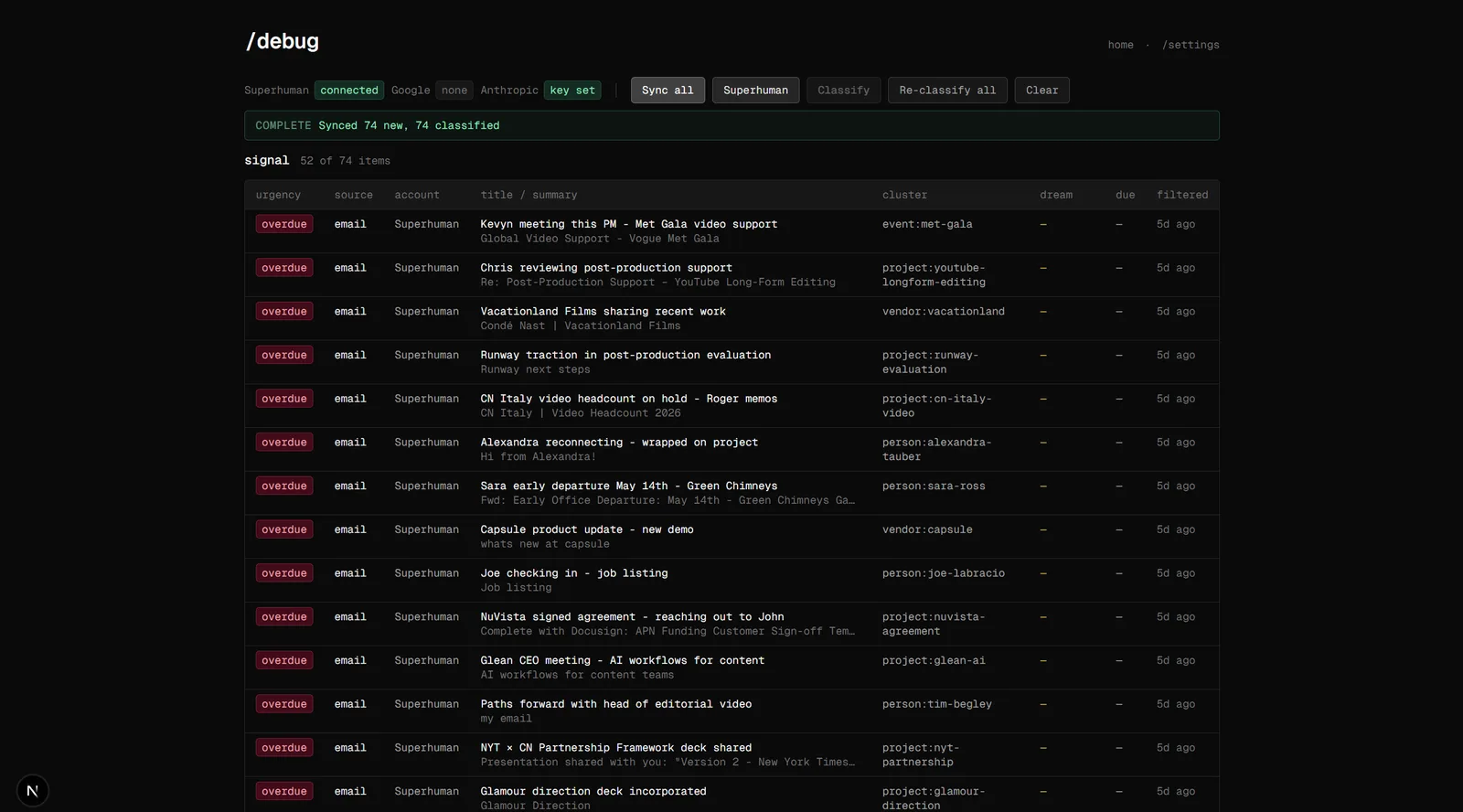
On platform /debug backend for input ingest and classification
Screen

Approach & Trajectory

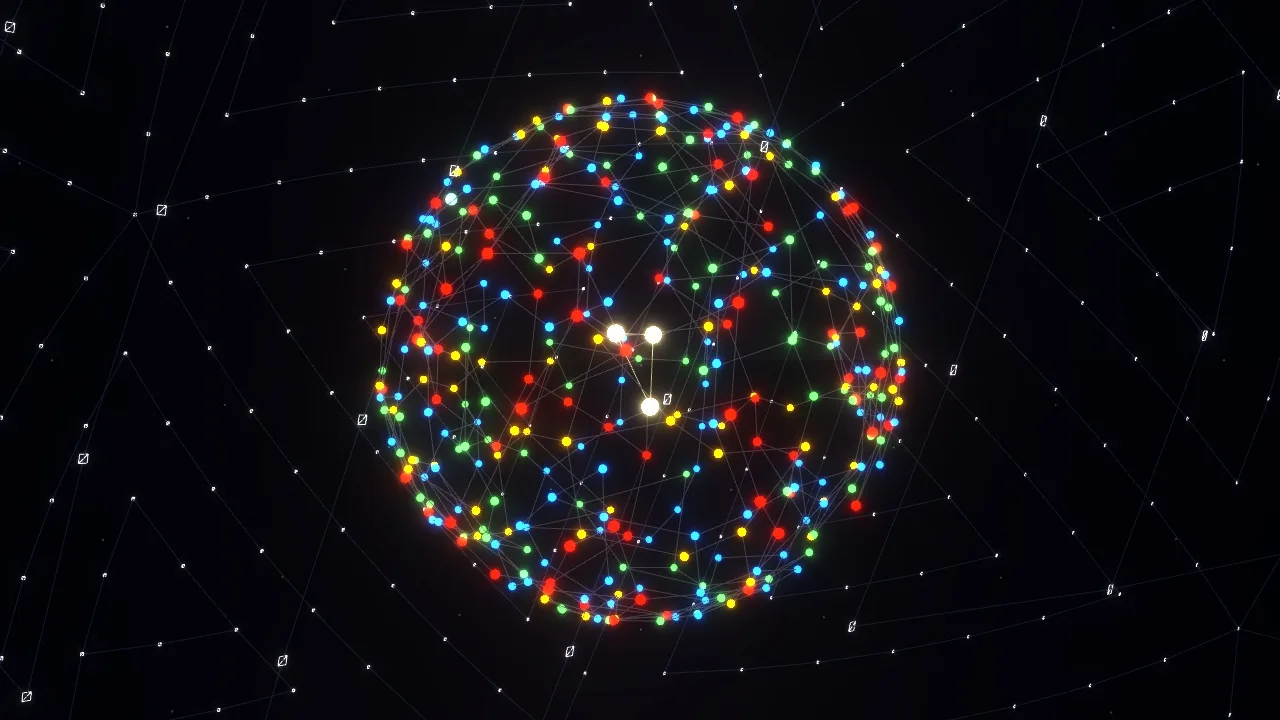
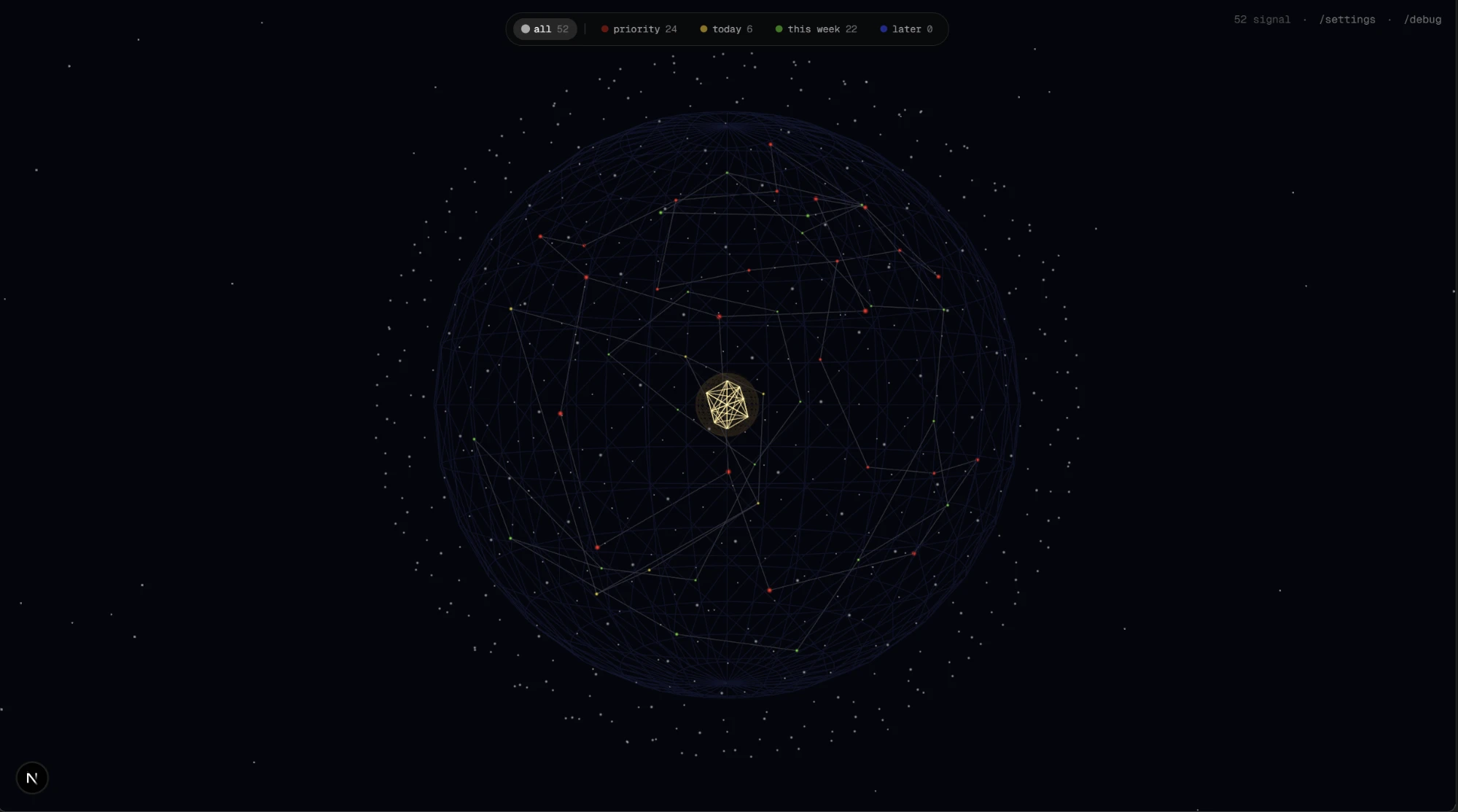
I wanted something with depth — almost celestial, as if mirroring the soul. I went into TouchDesigner and plugged in the Claude Code CLI to generate a reference animation of what I thought the form should be. After a lot of iteration I exported a 3D spherical orb of multiple layers, with interconnected wireframes for each category of priority. I brought that reference back into Claude Code and worked it into a refined, pointillist, slowly rotating orb in space.

The outer layer holds completed tasks — capped at 500. Inside an almost-transparent wireframe orb, a top layer holds three categories: priority, overdue, today. Each task has its own color, and tasks within a category are connected by gossamer filaments. Select a category and it lights up while the others dim.

At the core, suspended inside it all, is a glowing wireframe you can click into to see the dreams you’ve collected — each one its own orb.

For the current development phase I plugged in Superhuman’s MCP and Google APIs to pull from multiple email accounts. Next phase: an Evernote MCP (in development) and Google Tasks integration for journaling. I’m also building a categorization system that groups task-dots closer together when they share a project or theme. Ultimately I want the system to learn the relationships — to tie projects and categories back to the dreams at the center.

I want the orb to be reactive. I’ve tested interactions where completing a task makes its point hover and dissolve — next phase, that completed task reappears as a satellite in the outer layer. The deeper goal: a workflow where work doesn’t read as noise but as part of a life — tasks and projects rotating around your passions and your dreams, all in one serene, beautiful place.

In Action

Capture
The Orb · devVimeo
The Orb — navigating spatial panels
Video